Quick summary
The best employee development software fits how your people grow. Growthspace is best for enterprises looking to close named skill gaps. BetterUp works well for whole-person growth through science-backed coaching. Meanwhile, Learnerbly is great when employees choose their own learning.
Why organizations build skills with employee development software
Hiring for every skill gap isn't sustainable. It could leave new hires needing months to ramp up, making them more likely to leave than employees who've grown internally. Employee development software changes that. It builds the skills your team needs from the people you already have.
The challenge is figuring out which platform actually delivers. Some focus on behavioral coaching, others on self-directed content, and a few match employees with subject-matter experts for targeted skill sprints. This guide breaks down five of the best and what makes each one a fit for a different kind of organization.
Why listen to us?
Growthspace is a precision skill development platform for enterprises. We pair people with vetted experts on 1:1, group, and workshop programs. Our ExpertX agents turn in-house expertise into always-on training, with a network of 2,500+ vetted experts in 65+ countries and a 97% match success rate.

At PayPal, 94% of participants felt their growth sprint met their goals. And 95% of participating managers saw significant improvement in their focus areas. That experience is why Growthspace can say where each platform does its best work.
What is employee development software?
Employee development software is a platform that helps organizations build skills across their workforce through structured programs. Think one-on-one coaching, group workshops, self-paced courses, or AI-driven training. You're closing the gap between the skills your people have today and the skills your business needs tomorrow.
These platforms replace the old approach of sending everyone to the same generic course and hoping something sticks. They'll personalize the experience based on what each employee actually needs to learn and how they learn best.
Vendors use several names for this category. You’ll see employee training and development software, employee development tools, and employee development and learning software. They also go by the name of organizational development software, though that term primarily covers company-wide change. Whatever the label, the goal is to get your people ready for what’s next.
Why is employee development software important?
- Retention improves when people grow: Employees who feel stuck leave. Development programs give them a clear path forward and a reason to stay.
- Internal mobility saves money: Promoting from within costs far less than recruiting externally, and the person already knows how your organization works.
- Skills stay current: Markets shift, tools change, and roles evolve. A good development platform helps your team keep pace without starting over every time.
- Engagement goes up: People who are actively learning tend to score higher on engagement surveys and contribute more to their teams.
- Leadership pipelines get stronger: Building managers and executives internally means you aren't scrambling to fill a VP role with someone who doesn't know your culture.
The best employee learning and development platforms compared
Each platform fits a different development need. The table compares delivery model, AI, and G2 ratings.
Platform reviews: the 5 best employee development tools
1. Growthspace
Best for: Enterprise-focused (500+ employees) hybrid employee development designed to meet named skill gaps.
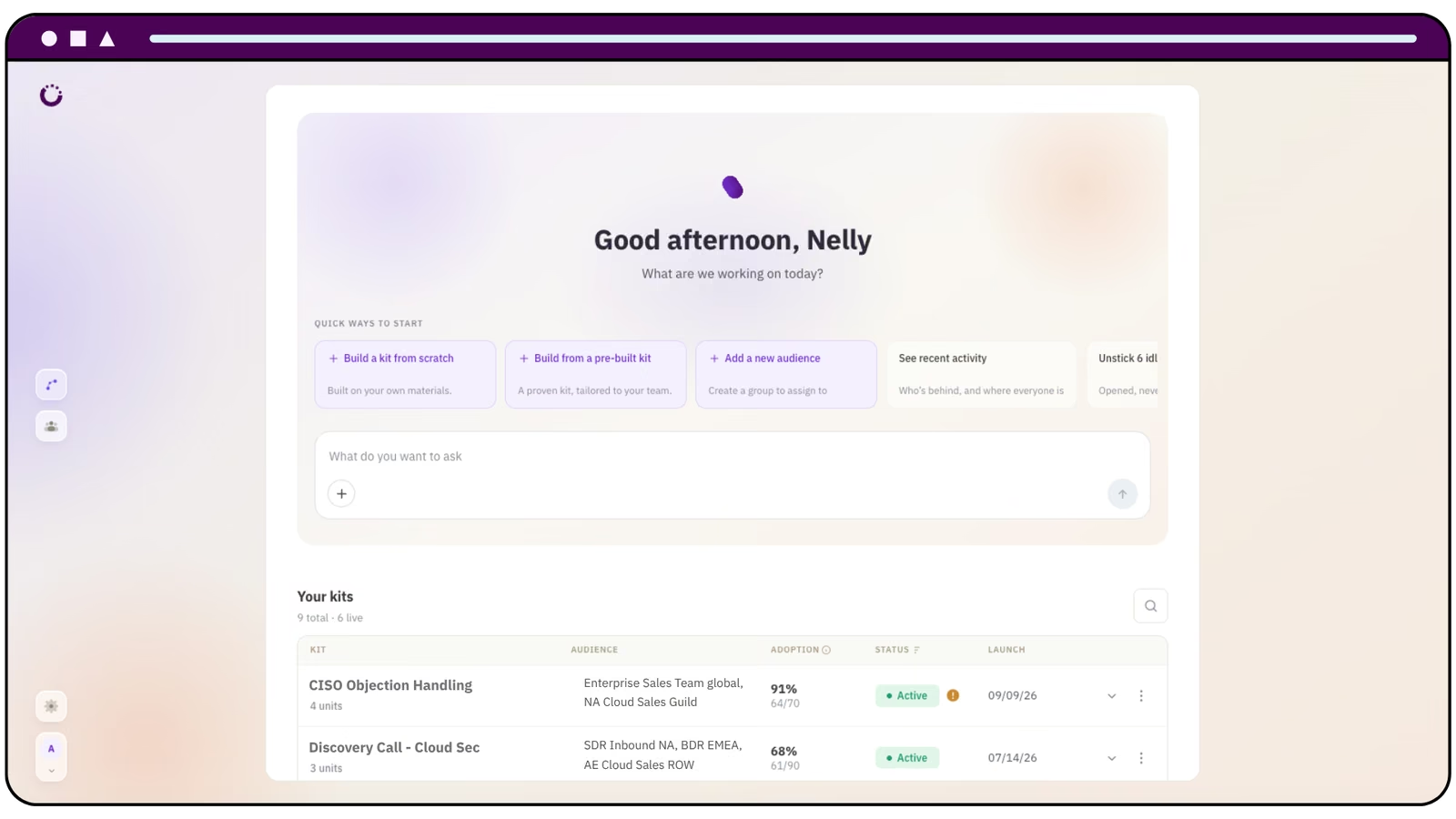
Growthspace is a hybrid employee development software for mid-market enterprises. Every program starts from a named skill gap. The platform then matches your employees with human experts and coaches who can best help close that gap.
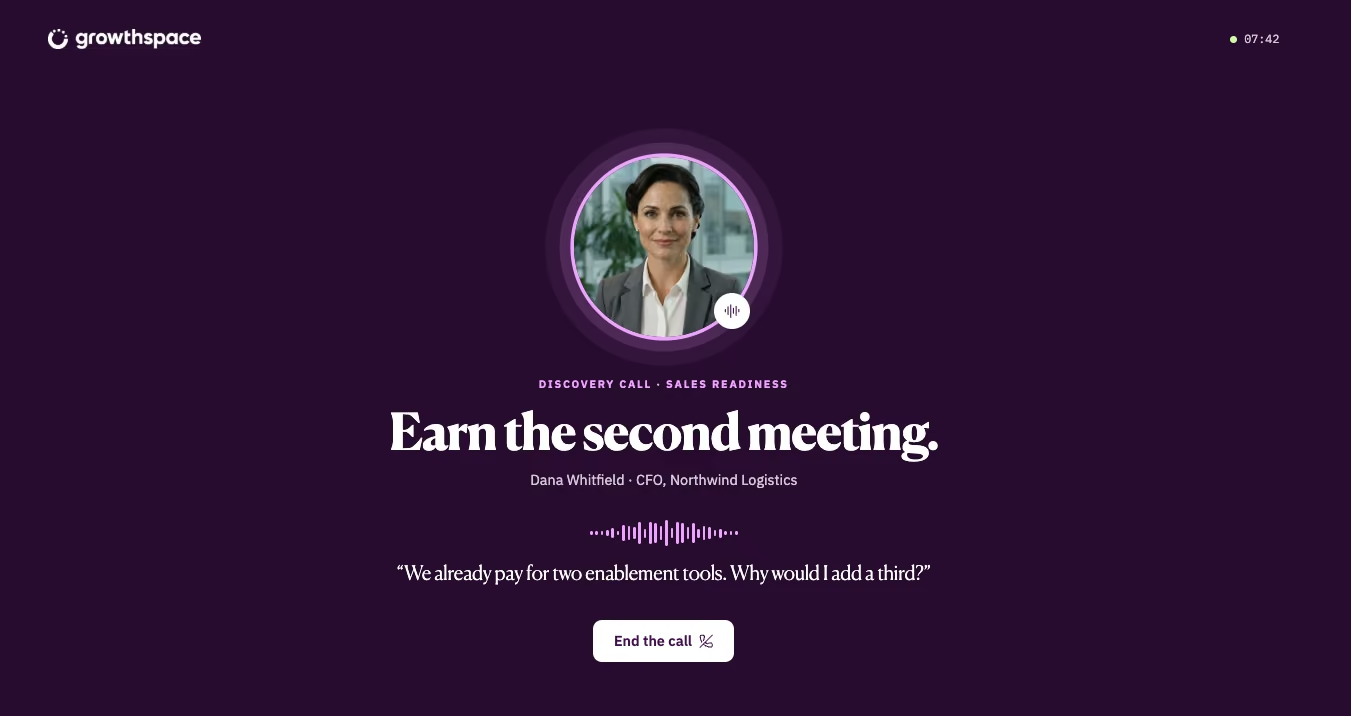
ExpertX is the AI side of Growthspace. It turns in-house expertise into always-on training. It learns from your SMEs, SOPs, training documents, recorded calls, and support tickets. Conflicts are resolved automatically and any stale content is dropped. Five agent types cover Q&A, presentations, roleplay, coaching, and custom programs. Every agent ties back to a real expert. Nothing reaches a learner until a training manager saves it.
Where skills still need a human, Growthspace matches each person with a vetted expert for 1:1 sprints of 6-8 weeks. Group sessions bring 3-6 colleagues together, and workshops train up to 15 people.
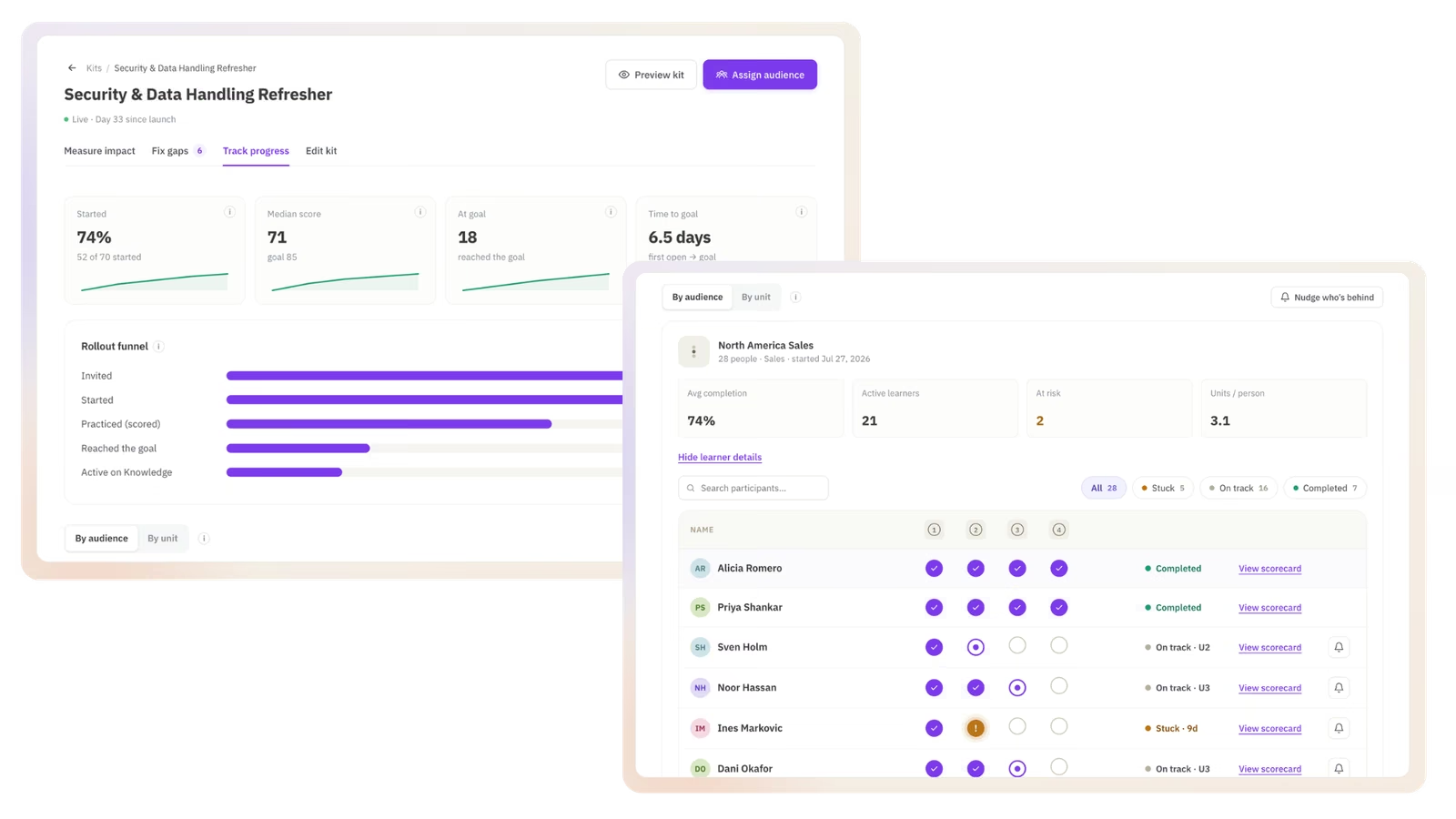
Every program reports business impact. Teams set custom KPIs and add manager feedback. At Securitas, employee retention rose 10.8% year over year.
Key features
- ExpertX AI agents: Turn your internal expertise into always-on training agents.
- Knowledge Agent: Answer technical questions from your own SOPs and docs.
- Role Play Agent: Practice conversations with personas built from your customers.
- 1:1 skill development: Match each employee with a vetted expert for focused sprints.
- Group skill development: Build one shared skill in teams of 3-6 people.
- Workshops: Train up to 15 people in expert-led, hands-on sessions.
- Impact measurement: Track custom KPIs, manager feedback, and ROI together.
Value props
- You get AI-led training and human coaching on one platform.
- Your experts scale their knowledge without giving up their calendars.
- Programs start from a named gap, so progress is clear.
- Group sessions and workshops teach one named skill to whole teams at once.
Why we picked this platform
We picked Growthspace for enterprises with specific, named skill gaps. We pair expert-built AI agents with human coaching. And we prove results with KPIs your leaders already track.
2. Grow by BetterUp
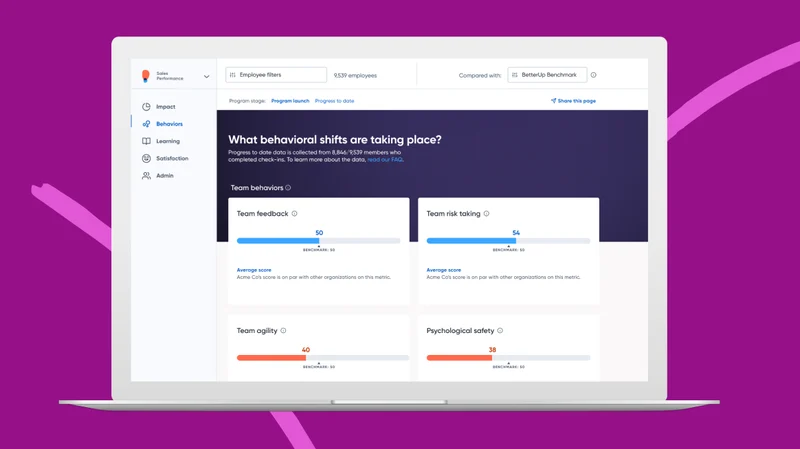
Best for: Whole person development with science-backed coaching.
BetterUp is a coaching platform built around whole-person development. Its coaching works on judgment, clarity, confidence, and resilience. Members can raise anything that shapes how they work, from stress to tough decisions.
BetterUp's Whole Person Model measures what drives performance. Assessments, coaching, AI nudges, and reporting all plug into it. BetterUp Labs backs the model with 40+ in-house PhDs.
Members work with a network of 4,000+ ICF-certified coaches. And those coaches work across more than 70 countries.
BetterUp Grow is the AI coaching side of the platform. It builds on data from 4 million+ coaching sessions and the Whole Person Model. Employees use it to work through confidence, clarity, and resilience in daily moments.
Key features
- Coaching network: Match members with 4,000+ ICF-certified coaches worldwide.
- BetterUp Grow: Coach people with AI built on the Whole Person Model, inside Slack and Teams.
- Whole Person Model: Anchor coaching, assessments, and reporting in one research-based framework.
- Whole-person assessments: Measure the well-being and mindset drivers behind performance.
Value props
- BetterUp builds confidence and resilience that carry into every role.
- Peer-reviewed behavioral research shapes how its coaches work.
- BetterUp supports people through stress and organizational change.
Why we picked this platform
We picked BetterUp for whole-person growth that's backed by science. It's a strong fit for leaders building confidence and judgment.
3. Learnerbly
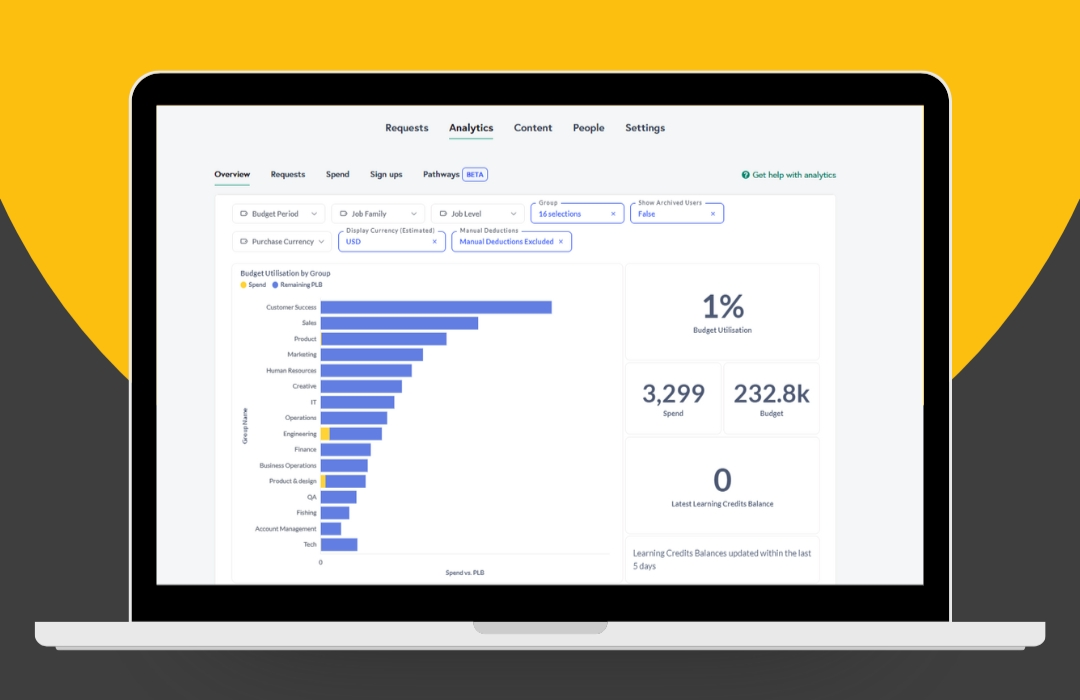
Best for: Employee-directed development funded through a personal learning budget.
Learnerbly gives every employee a personal learning budget. Your employees then decide what they'll learn and how.
Admins must first choose who's eligible and how much they'll get. Budgets reset each cycle, so unspent funds don't carry over. Teams can also share a pot with their own approver.
From there, employees browse quality-controlled providers and click Request. Managers approve requests, and small ones can auto-approve. Learnerbly buys the item with pre-purchased Learning Credits. So employees don't file expense claims for marketplace purchases.
The marketplace covers books, courses, coaching, conferences, and subscriptions. Learnerbly lists 100+ providers and 100,000+ courses, including MasterClass and Babbel. And at Signifyd, 70% of employees used their learning budget.
Key features
- Personal learning budgets: Set individual budgets and shared team pots.
- Learning marketplace: Browse books, courses, coaching, and events in one place.
- Approval workflows: Approve or decline learning requests right in Slack.
- AI learning assistant: Help people decide how to spend their budget.
Value props
- Employees own their growth and pick the format they like.
- Finance gets one invoicing flow for all learning spend.
- Managers approve requests, so spend stays under control.
Why we picked this platform
We picked Learnerbly for employee-led learning on a set budget. It's a great fit if you trust your people's choices.
4. HowNow
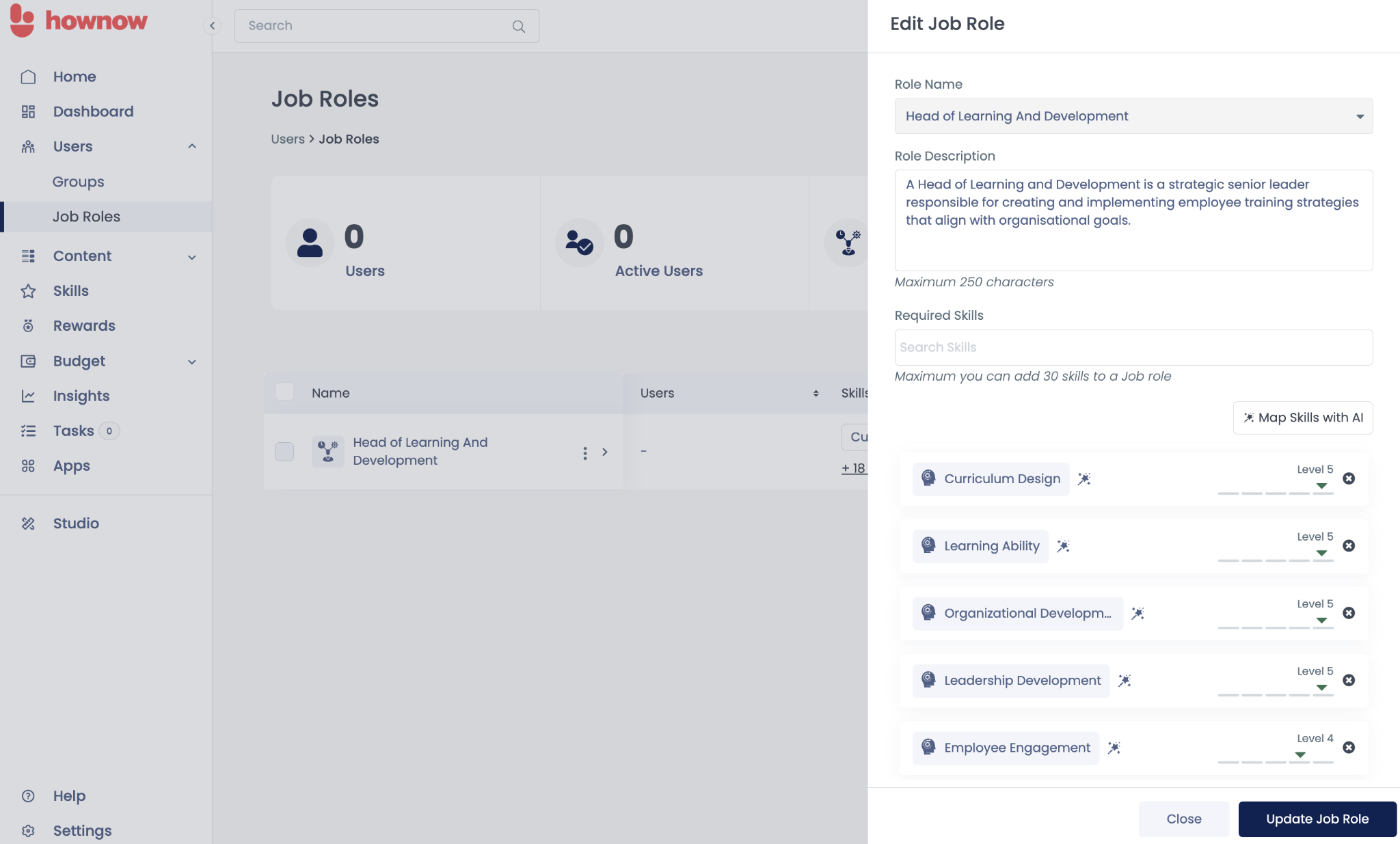
Best for: Content hosting and curation with live industry benchmarking.
HowNow is a learning and skills platform that hosts, curates, and benchmarks learning in one place. You can host courses, SCORM files, videos, and quizzes there. Teams can also build short Nuggets and structured Pathways.
HowNow can also pull in content you've already got. Content Syncs connect LinkedIn Learning, Udemy, Coursera, and more. Knowledge syncs add Google Drive, SharePoint, Notion, and Confluence. Your people don't have to search ten places for answers.
The platform benchmarks skills against live job-market data. That data covers 30,000+ skills from real-time job listings. Its AI then maps each role's skills and levels. So your skill targets keep pace with the wider market.
Key features
- Content Syncs: Import courses from LinkedIn Learning, Udemy, and Coursera.
- Unified Search: Search Drive, SharePoint, and Notion content from one bar.
- Skills benchmarking: Map the skills each role needs using labor market data.
- Content hosting: Host courses, SCORM files, videos, and quizzes in one library.
Value props
- All your learning content lives in one searchable home.
- You save creation time by curating content you already own.
- Your skill targets line up with live industry benchmarks.
Why we picked this platform
We picked HowNow for content-heavy L&D teams. It's ideal if you're juggling scattered tools.
5. Valence
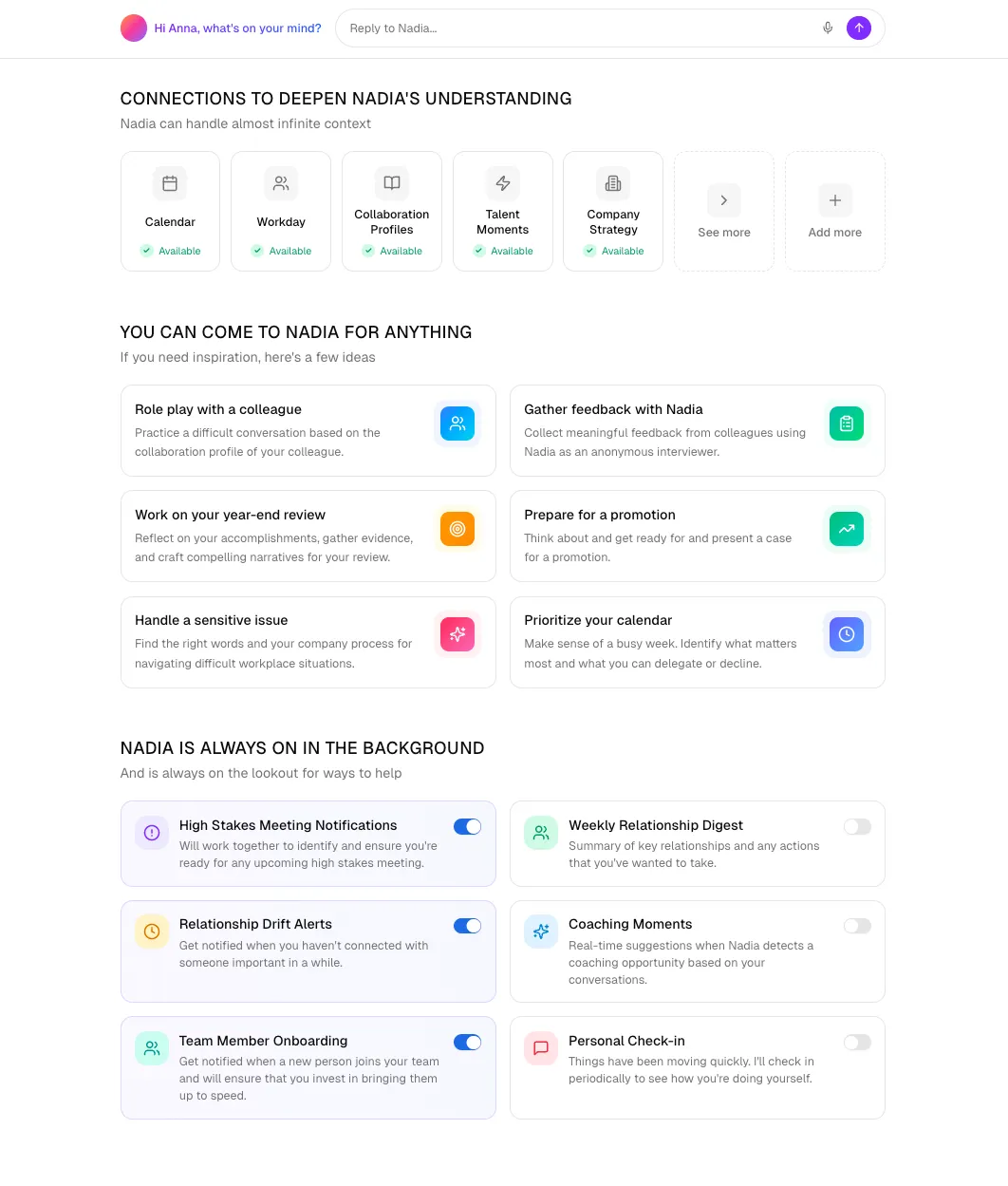
Best for: AI-only proactive learning and development.
Valence owns and runs Nadia, an AI coach for enterprise teams. Every coaching conversation happens with Nadia. The AI is always available and doesn't wait for employees to ask for help.
The platform connects to your Outlook or Google Calendar. Once it's connected, your meetings get Prepare and Debrief buttons. So before a tough 1:1, your employees get a prep brief. Later, Nadia follows up by email and optional SMS.
Nadia also remembers past conversations and goals. So goals from January show up in your mid-year review.
The AI’s proactive style helps different roles in different ways. For example, managers prepare for review conversations before they have them. Frontline managers prep shift handoffs right from their phones.
Key features
- Calendar integration: Prepare for and debrief meetings straight from your calendar.
- Proactive nudges: Prompt employees to set and track goals between reviews.
- Conversation memory: Carry context from past sessions into new ones.
- Follow-ups: Get email follow-ups and optional SMS check-ins after meetings.
Value props
- Nadia reaches people right before high-stakes moments.
- Valence scales coaching to every employee without adding coaches.
- Nadia coaches in over 100 languages, so AI-only coverage reaches global teams.
Why we picked this platform
We picked Valence for always-on coaching delivered entirely by AI. It's great for large workforces that need support between meetings.
How we evaluated the platforms
The five employee development platforms were evaluated on six factors. Each factor looks at the platform itself: what it does, what it proves, and how it protects people’s data. Every detail comes from the vendor’s own documentation.
- Development method: How does each platform build skills? Methods include expert coaching, curated content, learning budgets, and AI. We also noted what research or results back each method. The method sets what a platform can actually change.
- Personalization: Does the platform adapt to each person’s role, goals, and skill level? Or does it give everyone the same path? Relevant learning gets used. Generic learning gets skipped.
- Day-to-day usability: Where and how do people use the tool? Does it work inside Slack, Teams, or a mobile app? Does it prompt people to come back? A platform people ignore builds no skills.
- Measurement and reporting: What does each platform report? Some show completion only. Others track skill progress and business results. Admins need that view to prove the program works.
- Security and data handling: People share goals, feedback, and career concerns with these tools. We looked for certifications such as SOC 2 and ISO 27001. For AI tools, we also checked for guardrails on sensitive topics.
- Proof and user feedback: We reviewed published customer results and G2 ratings. We read review counts, not just scores. A high rating from a few reviews is less reliable than the same rating from hundreds.
Vendor details were checked against public documentation in November 2026
Different types of employee development platforms
Employee development and learning software comes in five main types.
- Hybrid AI and human platforms: Combine AI training agents with expert-led coaching.
- Human coaching platforms: Pair employees with certified coaches for ongoing sessions.
- Learning budget marketplaces: Give each employee funds to buy their own learning.
- Learning experience platforms (LXPs): Host, curate, and recommend learning content.
- AI coaching assistants: Coach employees with AI coaching inside daily tools.
Each type solves a different problem. Coaching platforms change how people behave at work. Content platforms, meanwhile, organize what your company already knows. Budget marketplaces give employees more say in what they learn. And hybrid platforms take on several of those jobs.
How to choose the best employee development platform for your organization
Your situation matters as much as any feature list. Work through these five steps before deciding.
1. Name the skill gap and the result you need: Write one sentence that covers the skill, the team, and the business result. For example: “Sales managers need stronger coaching skills so quota attainment rises.” A skills gap analysis, manager input, and performance data all help. If two leaders describe the gap differently, settle that before you shop.
2. Size the audience and the rollout: Count who needs support now and who needs it next year. Note locations, languages, and roles. A tool that suits 50 managers may strain at 5,000. Decide whether you want a pilot group, one function, or the whole workforce.
3. Decide who steers learning: Some organizations assign programs through L&D. Others let managers guide plans, or give each person a budget to spend. Match the model to your culture. Teams that value choice may resist assigned paths. Teams that need consistency may struggle with open budgets.
4. Plan the budget and contract terms: Ask how pricing works: per person, per program, or per learning budget. Check what’s included, such as coaching hours, content, support, and setup. Request a total cost for your headcount, so you can compare quotes like for like. Ask about renewal terms before you sign.
5. Check references, then run a pilot: Ask for customers of similar size, industry, and region, and speak with them directly. Then pilot with one team for a fixed window, such as eight weeks. Invite HR, IT, legal, and finance to the review so their questions surface early. Judge the pilot against the result you named in step one.
Pick the platform that matches how your people grow
Each employee development platform solves a different problem, so start with the gap you need to close. Are you closing named skill gaps at enterprise scale? Then Growthspace is the strongest fit. It pairs AI agents built from your own experts with human coaches for the skills that need them.
Ready to see it in action? Book a demo with the Growthspace team today.
FAQs