Quick Summary
The right AI learning platform depends on what you need AI to handle, from coaching and practice to content creation, knowledge access, and skills tracking. The best options support those workflows without adding unnecessary complexity for L&D teams.
Here are our top three picks:
When DIY AI Falls Short for Corporate Learning
Leadership is asking L&D teams a version of the same question right now: why aren't we using AI for training and coaching yet?
Many teams have already tried the obvious first move: build something on top of ChatGPT or Claude, point it at a folder of internal docs, or program it for open-web retrieval, and see what happens.
That's where it gets complicated. Answers aren't always reliable, and nobody's quite sure who's responsible for fixing the system when something goes wrong. That's when AI learning platforms built specifically for corporate L&D start looking a lot more appealing.
The platforms on this list solve those problems in genuinely different ways. Some ground AI in a company's own experts. Some others keep AI for external session assistance. And others hand the complete coaching itself over to AI.
This article compares six AI learning and coaching platforms for corporate L&D in 2026, so you can see which approach fits your organization best.
Why Listen To Us
Growthspace works with enterprise L&D teams at companies including Securitas, Deloitte, EY, Siemens, PayPal, and Tim Hortons. We provide both human-led development and AI learning solutions, so we know firsthand where each model works best.
Our programs report a 30% increase in internal promotions, a 97% expert-matching success rate, and 95%+ answer accuracy on AI Knowledge Agents. That experience shaped how we evaluated this list, with a focus on accuracy, governance, development outcomes, and enterprise use.
What Is an AI Coaching Platform for Corporate Training?
An AI coaching platform for corporate training is software built specifically for skill development. AI plays a defined role in it. That role can involve creating, delivering, or reinforcing learning. This sets it apart from a generic AI assistant repurposed for the job.
Most L&D teams already use some form of AI. A chatbot might answer policy questions. An assistant might help draft course outlines. A pilot tool might handle early coaching conversations. These tools are useful on their own, but none of them count as a full learning platform.
This gap in platform effectiveness comes down to scope. A generic assistant can be pointed at almost any task. An AI learning platform stays focused on one job: developing skills, in whatever form that takes.
Some coaching platforms let AI handle the entire coaching interaction. Others keep a human coach or expert involved throughout.
This review includes platforms that cover both delivery approaches. Valence puts AI fully in charge, with no human coach involved. Most others blend AI and human expertise, though that blend isn't one-size-fits-all. For example, BetterUp and CoachHub lean on AI mainly for practice and support around a human coach. In contrast, Growthspace puts AI in the lead role, with a human expert governing what it knows.
Where AI Coaching Platforms Add Value for L&D Teams
AI coaching helps L&D teams extend development beyond scheduled training and live coaching. Here’s where that difference shows up most:
- It makes scarce expertise easier to scale. Internal experts, coaches, and experienced managers can only support so many employees directly. AI makes that guidance available more broadly without relying on the expert for every interaction
- It gives employees more opportunities to practice. Skills like giving feedback, handling objections, and managing difficult conversations improve through repetition. AI role-play lets employees rehearse before the real situation without scheduling another coach or facilitator
- It moves learning closer to the work. Employees can get support when a challenge comes up instead of waiting for the next course or coaching session
Best AI Learning and Coaching Platforms for Corporate L&D
Let's compare each AI coaching platform for workforce improvement by best-fit use case, delivery method, and standout capability:
1. Growthspace
Best for: Modeling in-house SMEs and scaling trusted internal expertise with a high level of accuracy
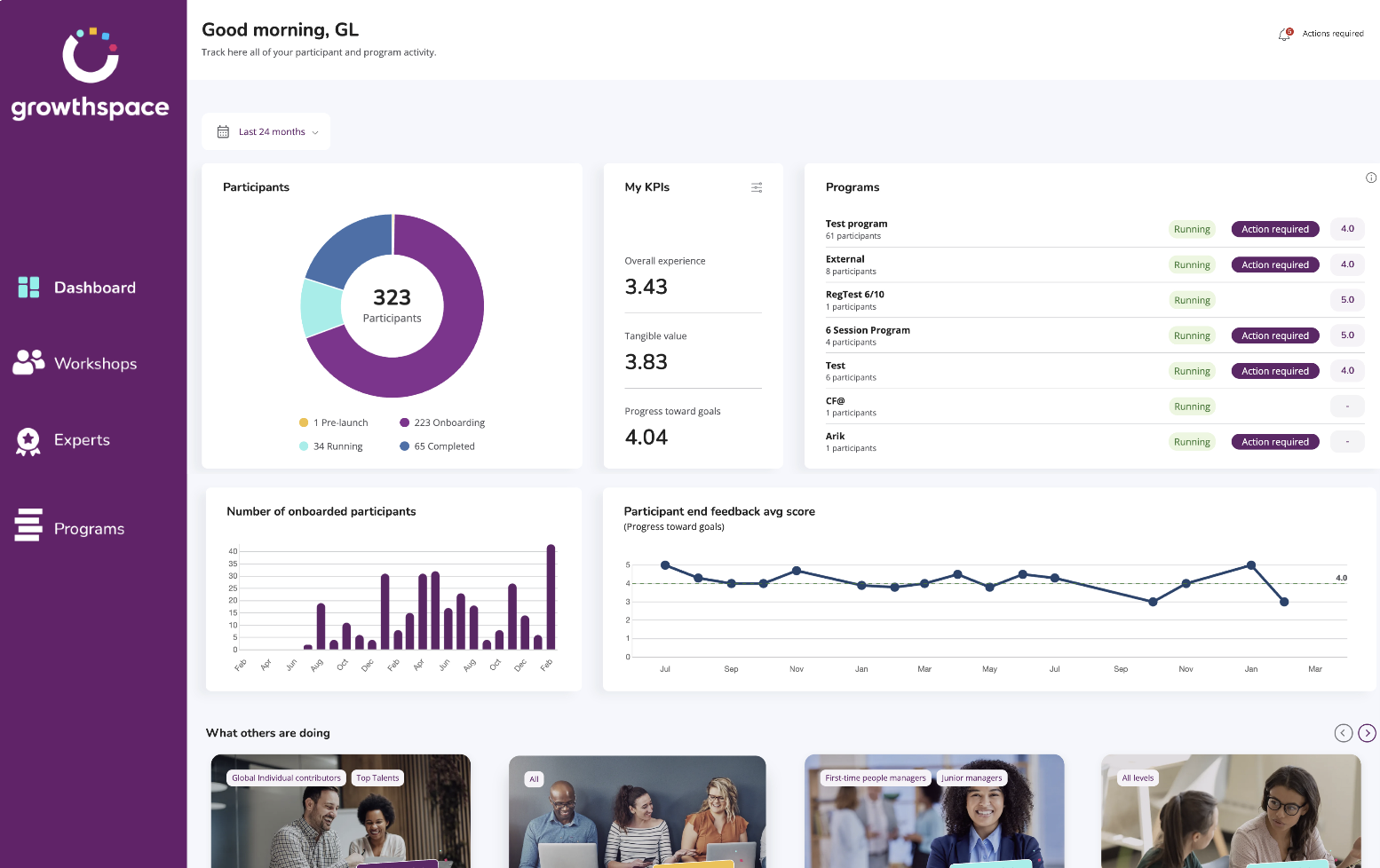
Growthspace is an enterprise learning and precision skill development platform. Powering its AI coaching capabilities is ExpertX, a roster of AI agents that serve as digital twins of an organization's own SMEs. These digital twins turn in-house expertise into always-on agents for learning, practice, and on-demand support.
The ExpertX agents pull from materials a company already has, including SOPs, process maps, internal documents, and presentations. They turn that knowledge into Q&A, guided learning, role-play, and coaching.
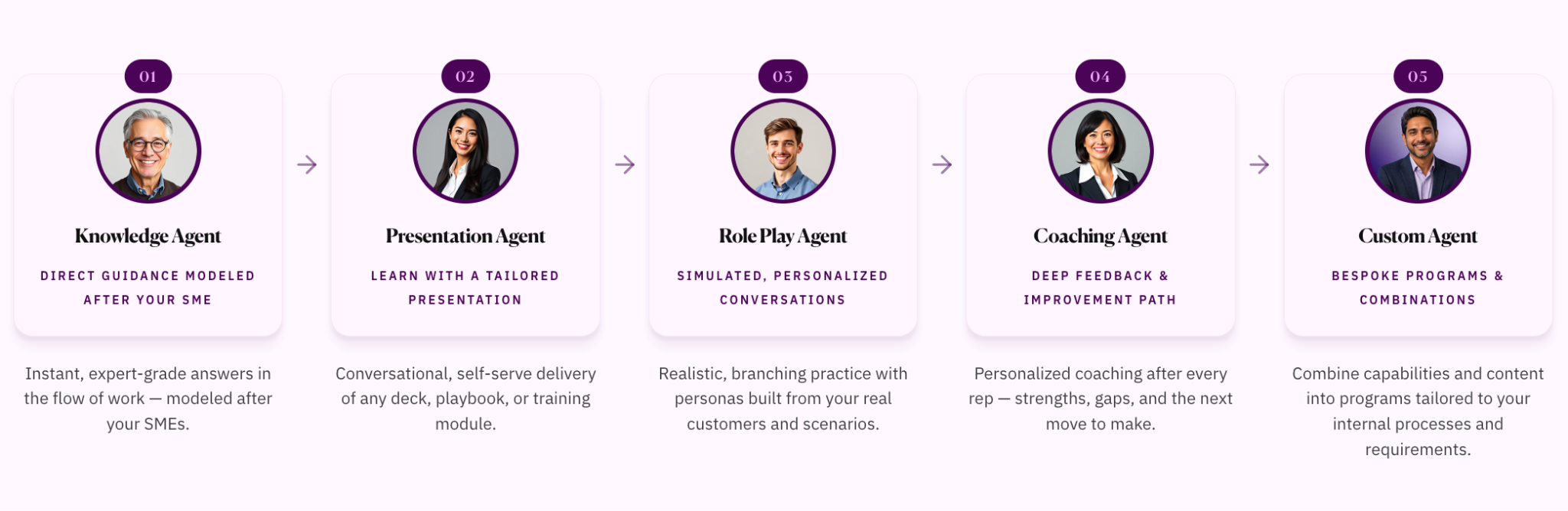
Each agent type handles a different job. Knowledge agents give direct access to expert answers. Presentation agents deliver tailored, conversational learning. Role-play agents run simulated practice conversations. Meanwhile, coaching agents provide follow-up feedback after each rep.
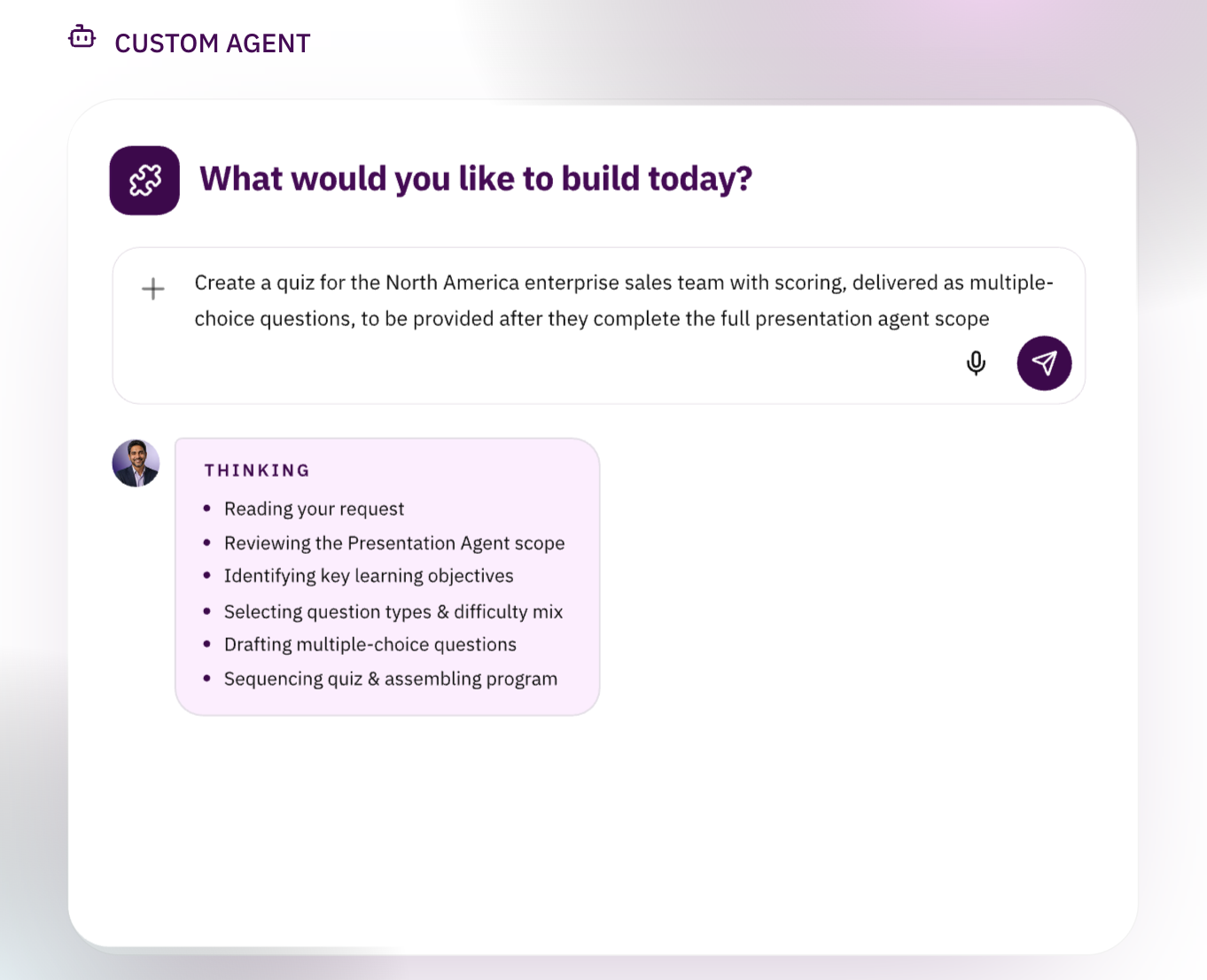
Teams can also build a custom agent around a specific use case or internal process when the standard agent formats don’t fit the program.
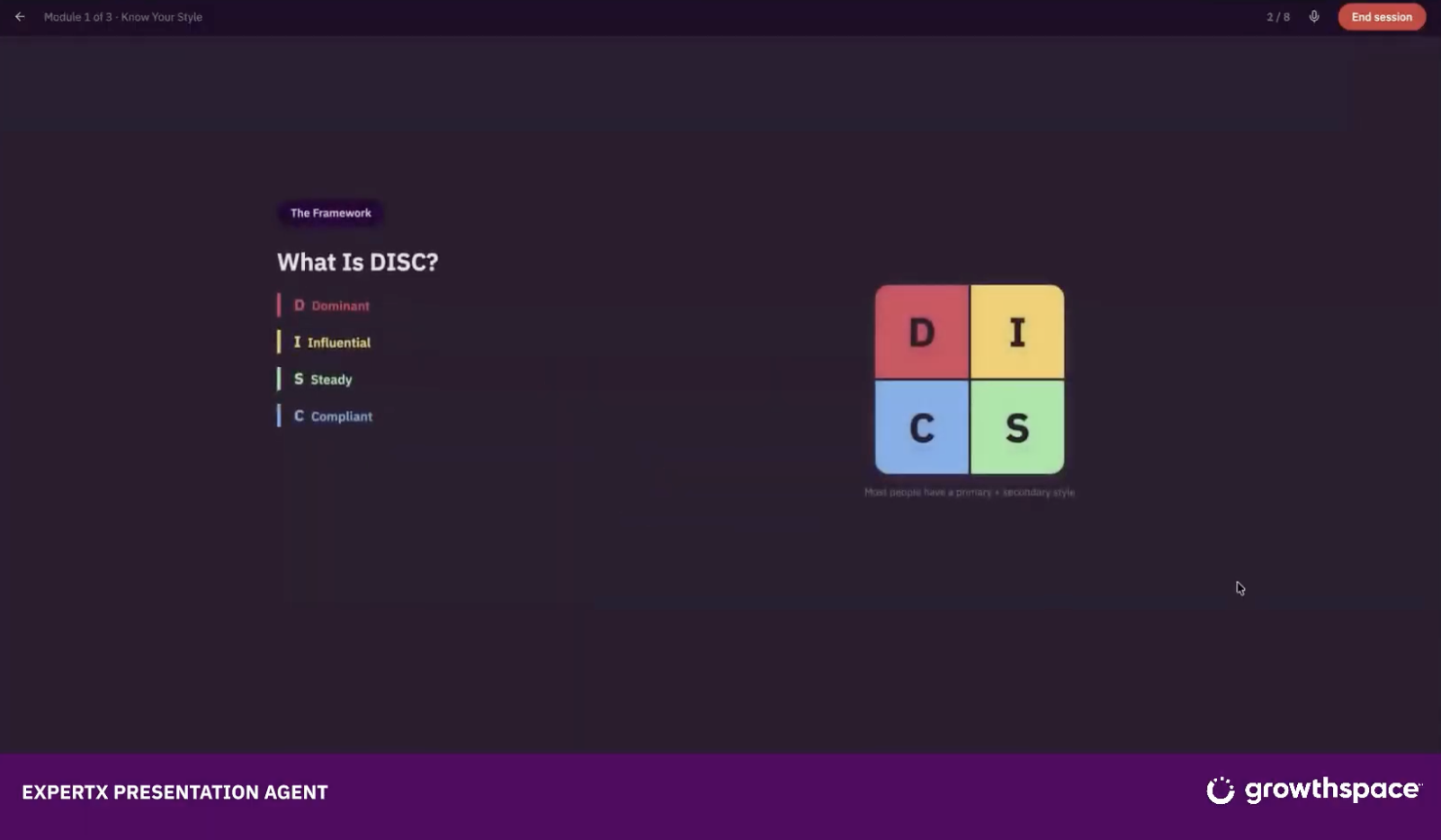
The experience adapts as it goes, instead of serving the same static content to everyone. Agents ask follow-up questions, apply internal frameworks to real situations that employees describe, and give personalized feedback as they practice.
Accuracy and governance sit at the center of the model. Agents answer only from approved organizational knowledge, with Growthspace citing 95%+ answer accuracy for Expert X knowledge agents.
Additionally, every agent ties back to a real expert. When the agent hits a question it can't answer, it says so and routes that question to the expert rather than guessing. The expert answers, and that answer is added to the knowledge base. In short, the agent continuously closes gaps, ending up with expertise that never sat in a document.
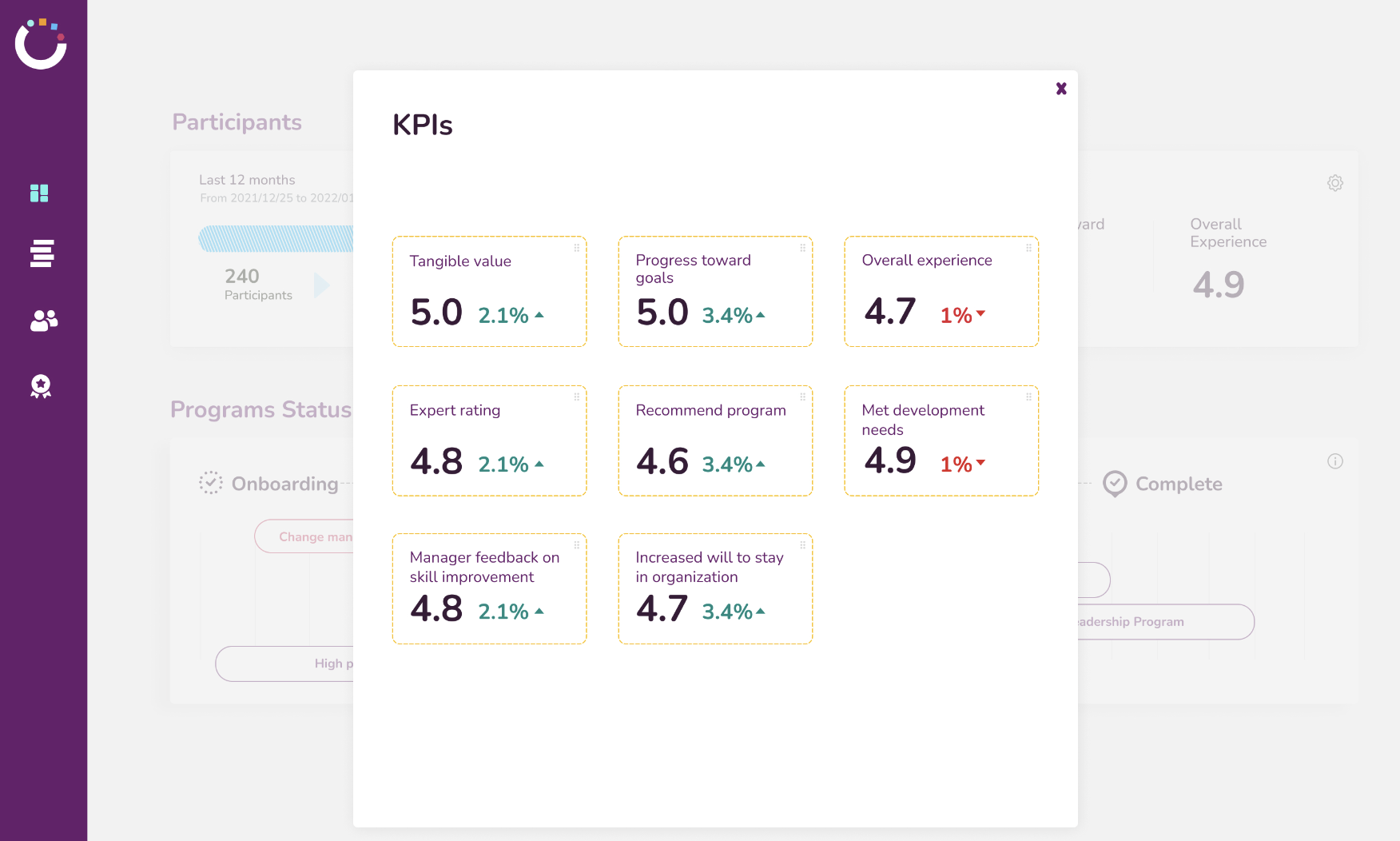
L&D teams start by defining the actual KPI a program is meant to move. From there, the platform tracks progress toward that goal, manager feedback on skill improvement, expert ratings, and overall program experience.
ExpertX supports management development, sales enablement, service, technical training, and AI adoption. When a skill gap calls for external coaching, Growthspace’s 1:1 development, group cohorts, and workshops can fill it.
Key Features
- Delivery method: AI agents handle the learning interaction, while human experts govern what each agent knows and step in when it can’t answer
- Content creation and curation: Uses existing decks, SOPs, playbooks, process maps, and internal documents to create Q&A, presentation-led learning, role-play, and coaching experiences
- Feedback management: Coaching Agents provide personalized feedback after practice, while manager and 360° feedback can help assess behavior change over time
- Goal management: Programs start with a defined business or development KPI, so every learning experience targets a measurable outcome
- Progress tracking: Measures goal progress, skill gains, engagement, manager-validated improvement, and overall program experience
- AI guardrails: Agents answer from approved organizational knowledge, avoid open-internet lookups, and escalate unanswered questions to a human rather than guessing
- Workflow integrations: Connects with tools including Microsoft Teams, Slack, Zoom, G Suite, Jira, Gong, and Microsoft Viva Learning
- Enterprise governance: Meets enterprise security requirements with SOC 2 and ISO 27001/27017/27018 certifications
Pros
- Scales a company's actual experts instead of generic coaching content, so answers reflect real internal knowledge and expertise
- Knowledge compounds over time, since every gap the agent finds routes to an expert whose answer feeds back in
- Role-play and coaching agents give employees unlimited low-stakes practice reps without booking a live person each time
- Human-in-the-loop design means the agent defers instead of guessing, which directly addresses the accuracy risk of a DIY build
- Knowledge Agents can go live in under an hour once source content is loaded
- Delivers consistent training quality across regions and shifts
Cons
- Works best when teams know which use case they want to solve, rather than exploring AI broadly
Why We Picked This
Growthspace earns its spot for how ExpertX grounds AI learning in organizational expertise. It models a company's actual experts, using their own material. A real expert stays in the loop when the agent doesn't know something. The result is precision skill development, not generic training content.
The solution also provides L&D teams with a more structured alternative to the common DIY route. Many teams try to build a training agent using ChatGPT or Claude instead. That path tends to run into the same problems. Retrieval issues, outdated answers, and hallucination risk all creep in. On top of that, prompts need constant upkeep. Growthspace removes that burden.
What Customers Are Saying
Growthspace scores 4.8/5 on G2, with customers frequently highlighting personalized development and flexibility.
John Lucas, a Growthspace customer at Stanley Black & Decker, pointed to its ability to extend development beyond scheduled learning moments:
"As we know, work and therefore development isn't confined to an eight-hour day. We are constantly learning, and we're constantly growing. ExpertX opens the door to this learning whenever and wherever the need arises."
He further described ExpertX as "both additive and multiplicative to the personalized learning development experience."
Pricing
Growthspace provides custom enterprise pricing based on program requirements.
2. BetterUp
Best for: Behavioral change coaching with AI support
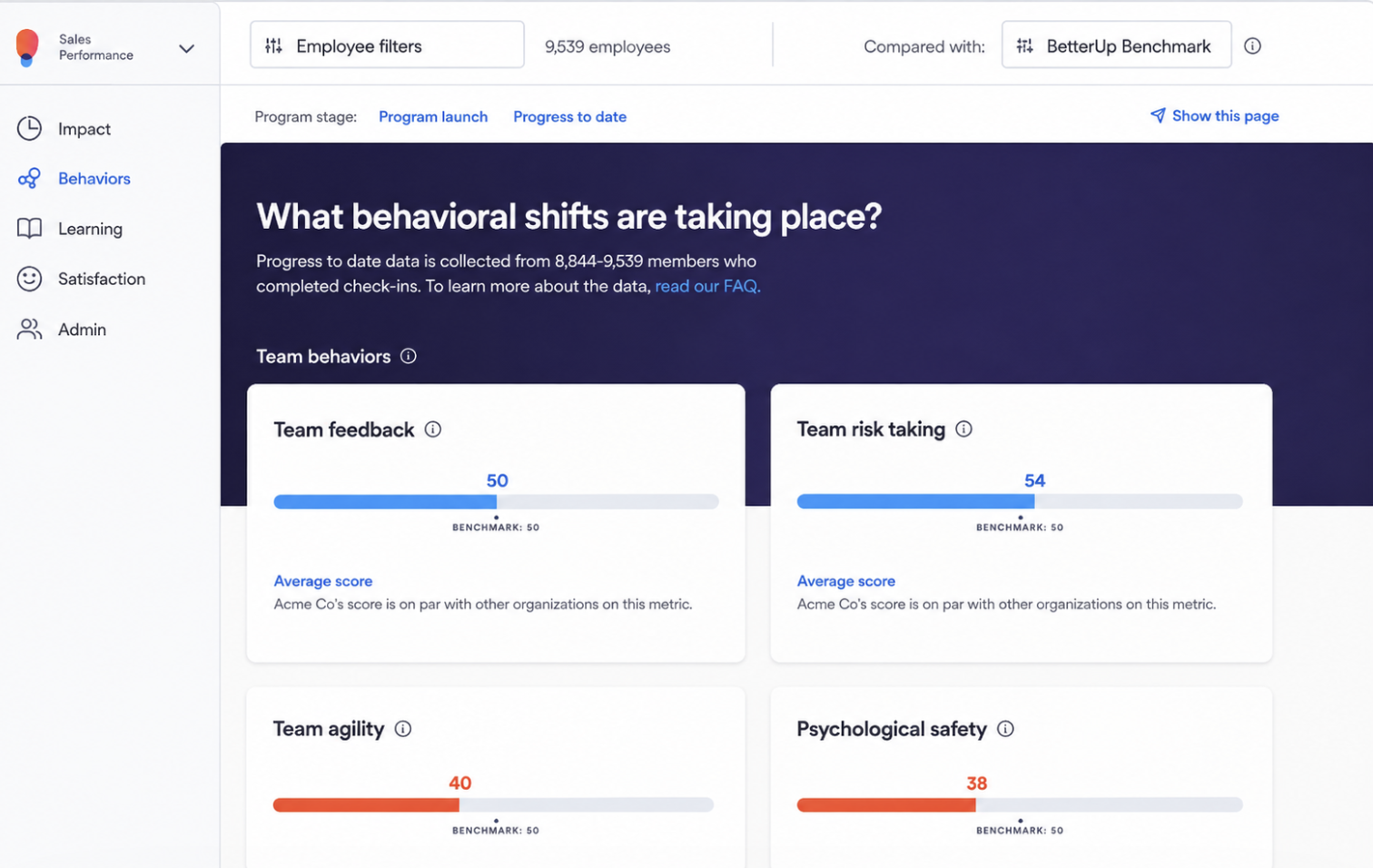
BetterUp is an enterprise coaching platform focused on leadership and behavioral development. Its AI offering, BetterUp Grow, provides employees with on-demand support for workplace situations such as feedback, performance conversations, goal setting, and manager challenges.
The platform also includes AI role-play for practicing difficult conversations before they happen. BetterUp’s Whole Person Assessment measures 25 behavioral dimensions, giving organizations a structured way to track development over time.
Key Features
- Delivery method: Human coaching plus a standalone AI Coach option, usable together or on their own
- Behavioral signal detection: Gives L&D teams visibility into behavior change, skill adoption, and workforce readiness over time
- 360° feedback: Adds input from peers, direct reports, and leaders to development plans
Pros
- Broad behavioral coverage suits organizations wanting wellbeing and leadership addressed together
- AI role-play supports practice before difficult conversations
- Human coaching remains available alongside AI support
Cons
- Less focused on technical knowledge development
- Aligns to your strategy and values, rather than answering company-specific questions
Why We Picked This
BetterUp is a shortlist pick for its breadth. It supports workforce-wide development across multiple behavioral areas, backed by a large network of human coaches and years of behavioral science research.
Pricing
Plus and Premium plans with custom pricing.
3. CoachHub
Best for: AI-supported coaching across a large multilingual coach network
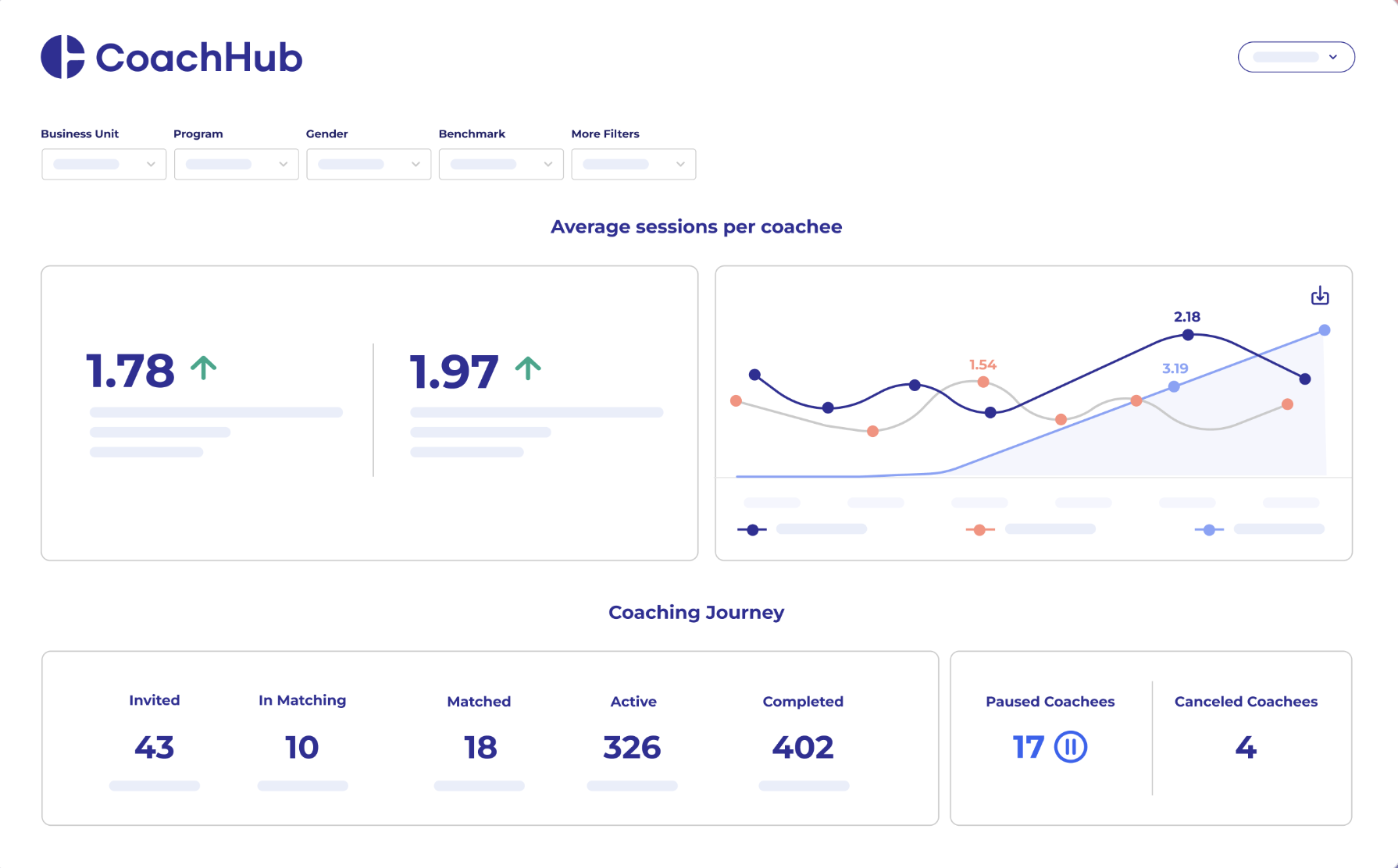
CoachHub pairs human coaching with two AI products built on the same technology: AIMY and CoachHub Companion. AIMY is a standalone AI coach for employees without a personal coach. It works best for goal-based development. The CoachHub Companion is an add-on for employees who already have a human coach assigned to them. It works best as in-between support, offering guidance on live situations, role-play practice, and nudges toward relevant content, all inside Microsoft Teams.
The platform’s strongest fit is distributed workforces. Coaching is available in over 80 languages, so a team spread across regions receives consistent, multilingual support, leading to an improved learning experience.
Privacy sits alongside CoachHub’s impressive reach. Conversations with AIMY aren't shared with HR teams. Instead, the platform surfaces aggregated, anonymized insights, so leadership can track coaching trends without employees worrying who reads their sessions.
Key Features
- Delivery method: AI supports human coaching between sessions (CoachHub Companion) or as a standalone solution (AIMY)
- Multilingual coaching: Coaching is available in 80+ languages across distributed teams
- CoachHub Feedback: Draws on manager and peer assessments, separate from AIMY conversation content, to measure behavior change over time
Pros
- Broad language coverage suits multinational workforces
- AI support remains available between scheduled coaching sessions
- Multi-source feedback gives L&D teams another way to assess coaching impact
Cons
- Draws on CoachHub's coaching methodology and the program details you provide, not your internal knowledge base
- The Companion runs only in Microsoft Teams
Why We Picked This
CoachHub stands out for global reach, combining multilingual human coaching with AI support across distributed teams.
Pricing
Custom pricing.
4. Torch
Best for: AI-powered leadership coaching tied to 360° feedback
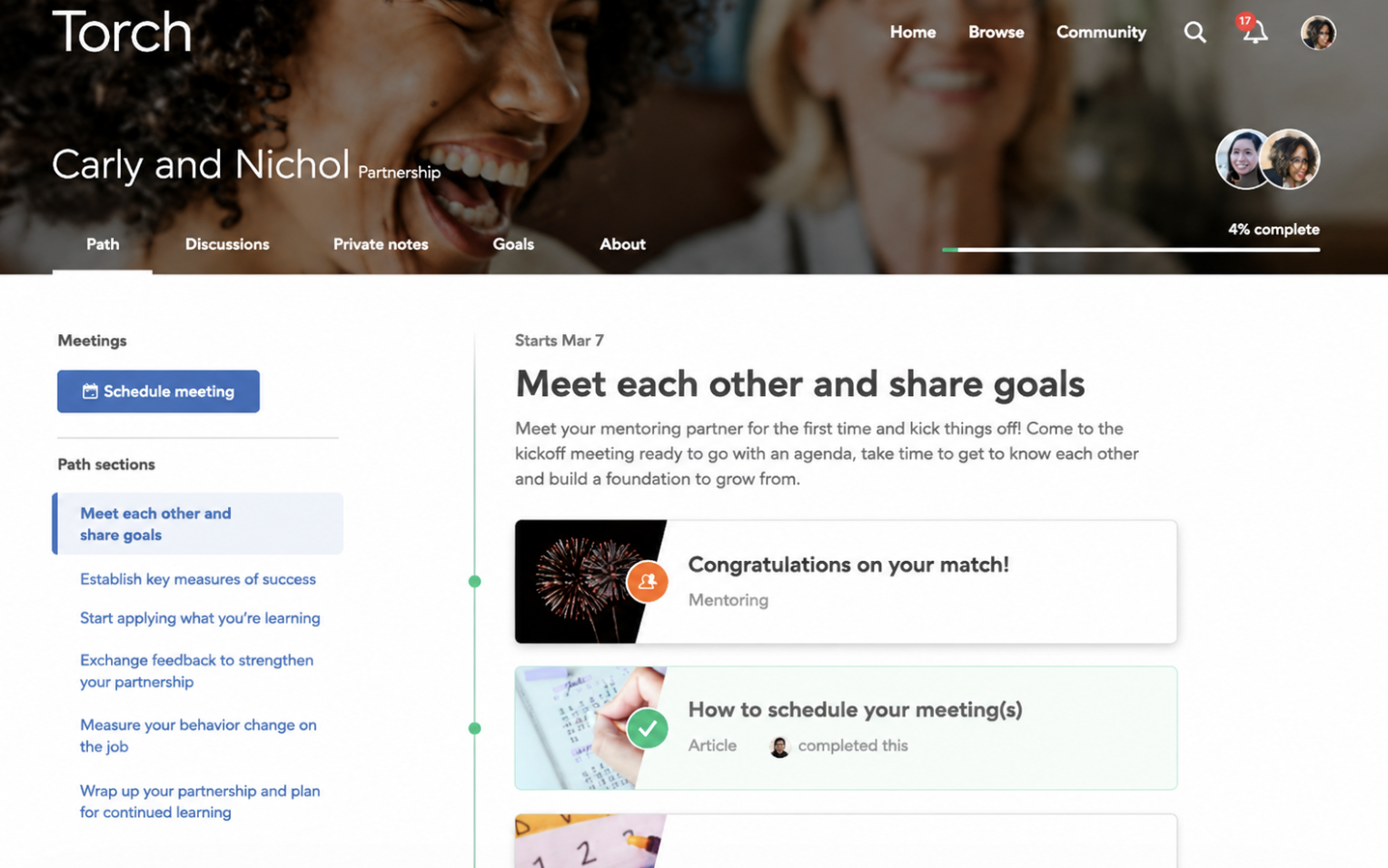
Torch is a leadership coaching platform that pairs human coaching with Spark, its always-on AI coaching agent. Spark helps employees work through leadership challenges, prepare for difficult conversations, and practice situations via text, voice, and role-play.
The platform is structured around company-defined leadership capacities. Those priorities shape both live coaching and Spark, while 360° feedback gives employees input from managers and colleagues on how those behaviors show up at work.
Key Features
- Delivery method: Human coaching and mentoring, with Spark AI available as always-on support
- Leadership capacities: Aligns coaching and AI conversations with the organization’s selected leadership priorities
- 360° feedback: Uses manager and colleague feedback to guide development and measure leadership growth over time
Pros
- Spark's practice sessions are available round the clock
- Spark remembers each user's role, challenges, and patterns, so a first-time manager gets different support than a senior leader mid-restructuring
- Development extends to every employee rather than only those with a dedicated coach
Cons
- Setting up capability mapping against a leadership strategy takes real work before coaching begins
- Spark is focused mainly on leadership scenarios rather than broader learning use cases
Why We Picked This
Torch earns its spot for tying AI coaching to a defined leadership model. Company-selected capacities shape both live coaching and Spark, so development tracks against priorities the organization actually set rather than generic leadership content.
Pricing
Custom pricing.
5. Valence
Best for: Proactive AI coaching that surfaces support before frontline high-stakes moments
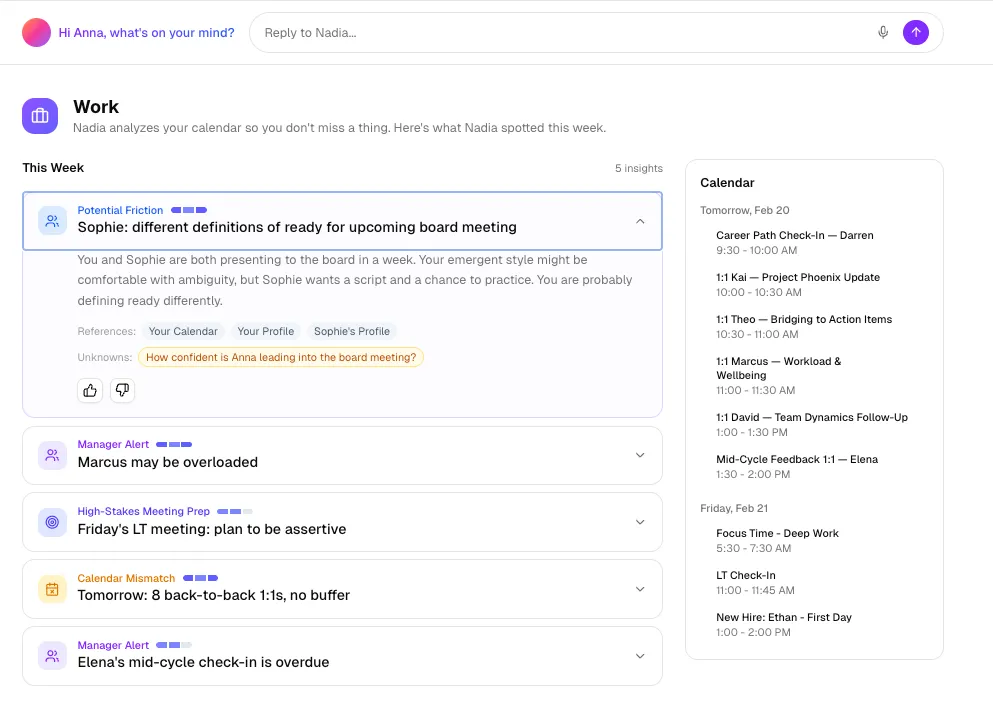
Valence delivers AI-first coaching through Nadia, an always-available AI coach for frontline managers and employees. Nadia uses context from calendars, team dynamics, company priorities, and past conversations to support moments like goal setting, feedback, performance reviews, and difficult meetings.
The platform is designed to coach proactively rather than wait for employees to ask for help. Nadia can surface meeting preparation, follow up on goals, and flag unresolved team issues.
Key Features
- Delivery method: AI-only coaching through Nadia, with no human coach network
- Calendar-aware coaching: Uses calendar and meeting context to prepare employees before important workplace moments
- Team diagnostics: Surfaces team patterns and supports managers with structured conversations and follow-up actions
Pros
- Organizations can load existing course content into Nadia, so answers reflect their own frameworks and language
- Nadia remembers goals and past interactions, so coaching context carries forward over time
- Supports frontline access through mobile and 100+ languages
Cons
- No human coach is available when employees want live interpersonal support
- Since there is no human expert review, information accuracy rests entirely on the AI and the context it's been given
Why We Picked This
Valence earns its spot as the AI-only coaching platform at scale. Its always-on model suits organizations that want frontline managers to access support throughout the workday without relying on scheduled human coaching.
Pricing
Custom pricing.
6. Coachello
Best for: AI coaching and role-play inside Microsoft Teams and Slack
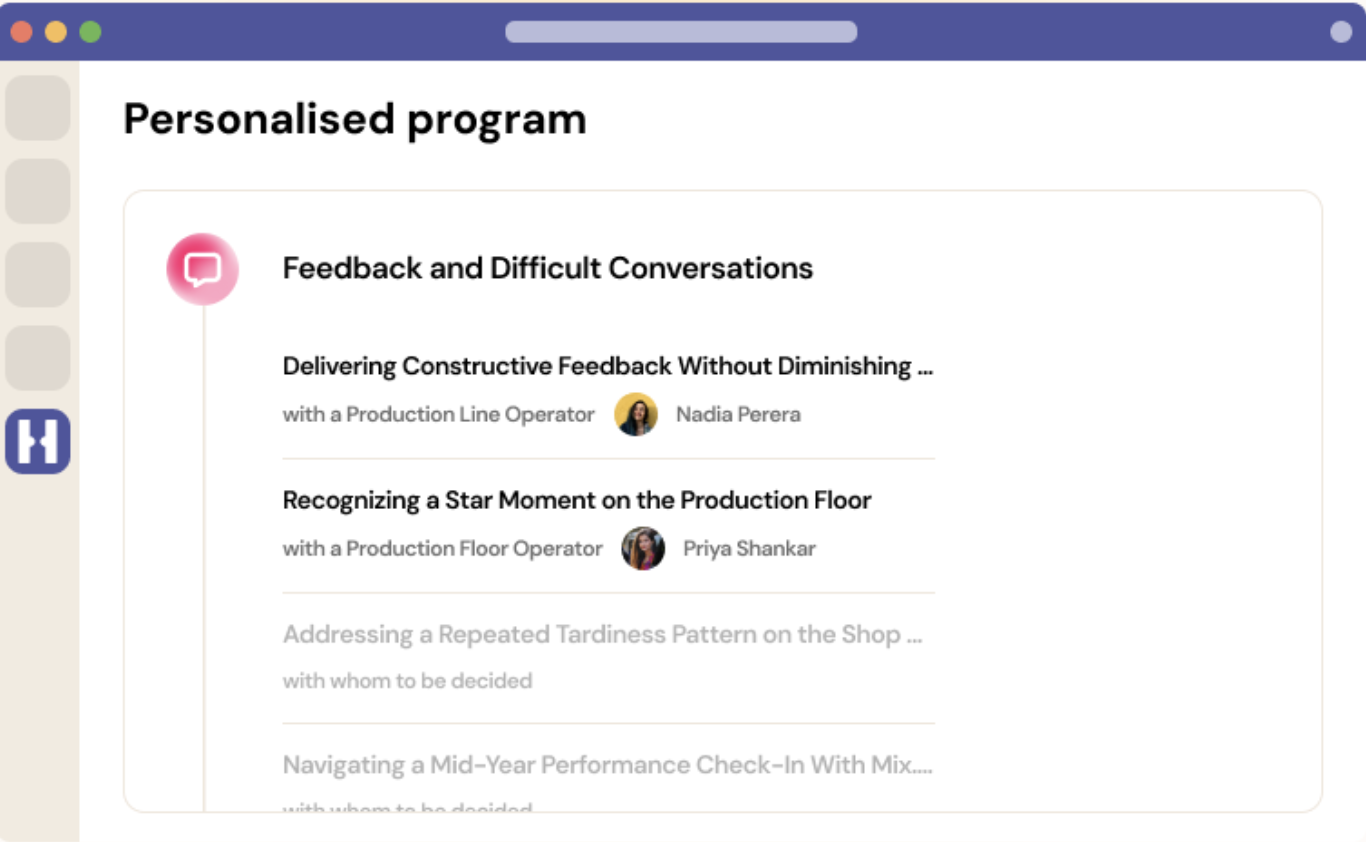
Coachello is an AI-enabled coaching platform built for soft-skill and leadership development inside Microsoft Teams and Slack. It combines human coaching with AI coaching and role-play, so employees can practice workplace conversations without leaving the tools they already use.
Its AI role-play is built around scenarios such as feedback, conflict, stakeholder management, and performance conversations.
Key Features
- Delivery method: Human, AI, or a mix of both, chosen per program, with role-play practice available anytime
- Guardrails and integrations: Data processed under ISO 27001:2022 and Microsoft 365 compliance standards, with SSO or Magic-Link access and native Teams/Slack integration
- Program builder: Lets HR teams define target populations, cohort rules, KPIs, and coaching frameworks before launch
Pros
- Living inside Teams/Slack removes a common adoption barrier since employees don't need a new login
- Two-way calendar sync and automated booking reduce manual coordination
- Coaching analytics can be exported to Power BI or Tableau for wider HR reporting
Cons
- AI avatars can show occasional latency during role-play
- Some learning sessions can feel too long for employees with limited availability
Why We Picked This
Coachello earns its spot for embedding coaching and practice directly into Microsoft Teams and Slack. Its mix of human coaching and AI role-play makes it a practical option for organizations that want soft-skill development inside their daily workflows.
Pricing
Custom pricing.
How to Choose the Best AI Software for Corporate Coaching
Start with the problem you're trying to solve, not the feature list on a vendor's homepage. Here's how to narrow the options.
Start With the Primary Problem
Before comparing platforms, identify where your current approach falls short.
- If expertise is stuck with a handful of people, look for a platform that can model and scale that knowledge with clear expert oversight
- If coaching capacity is the bottleneck, look for human coaching with AI support that extends development between sessions
- If every manager needs ongoing access to support, an AI-only coaching platform removes the scheduling limits of human coaching
Match the Platform to Your Governance Needs
Different learning use cases carry different levels of risk. The more employees rely on AI for company-specific guidance, the more important its controls become.
Check Data, Integrations, and Security
Before committing, check whether the platform connects with the collaboration, HR, and learning systems your employees already use. A tool that sits outside existing workflows can create extra friction and make adoption harder.
You should also understand how the platform stores and uses internal content and employee data. This matters even more when you're uploading proprietary knowledge, training materials, or other sensitive company information.
Test It With Real Employees
A polished demo doesn't tell you how the platform performs with your own content and workforce.
- Load real source material and see how much setup L&D needs
- Give an SME or program owner access and see how easily they can manage it
- Test questions and scenarios the AI should and shouldn't be able to handle
- Have a small learner group use it without vendor guidance and watch where they struggle
If the platform requires constant intervention or workarounds during a small pilot, those problems are unlikely to disappear at enterprise scale.
Growthspace Leads for Organizations Prioritizing AI Accuracy and Governance
Most AI tools for L&D focus on reach: more coaching, more content, faster delivery. They don't address the harder problem underneath that. Whose expertise is the AI drawing from? What happens when it doesn't know the answer?
Growthspace's ExpertX is built around that problem. It models a company's own experts using their own material, keeps those experts in the loop to close knowledge gaps, and routes unanswered questions back to a human instead of guessing. Employees get AI grounded in trusted organizational knowledge, with human oversight built into the process.
Ready to scale your team's expertise without losing control over what the AI knows? Book a demo to see how Growthspace can bring trusted internal knowledge into the flow of work.
FAQs
Can AI coaching fully replace human coaches?
For some organizations, yes, an AI-only platform can cover broad, always-on manager support at a scale human coaches can't match.
For complex, high-stakes, or deeply personal development needs, most organizations still keep a human coach involved, with AI extending access rather than replacing the relationship entirely.
Is my company's internal data used to train the AI models on these platforms?
This differs significantly by vendor, and it's worth getting a direct answer before signing anything. Some platforms explicitly state they never use customer data to train underlying models; others aren't as clear. Don't assume either way without checking.
How is AI coaching accuracy measured?
It varies by platform. Look at what the AI is tested against, where its answers come from, and how it handles questions it can't answer.
For company-specific learning, grounding responses in approved internal content and flagging unknowns are crucial. Any stated accuracy percentage is only useful if the vendor explains how it was measured.

Related Articles
.png)
.png)
.png)
.png)
.png)
.png)
.png)
Ready to turn insights into impact?