Leadership training programs for new managers: what actually works (and how to combine it)
Most newly promoted managers get handed a new title, a bigger calendar, and very little else. According to a 2025 analysis by HR Dive, nearly 60% of managers report they never received any training when they transitioned into their first leadership role, a finding from the Center for Creative Leadership. The same article cites Gartner research showing that 60% of new managers fail within their first two years, largely because of that training gap.
That is not a talent problem. It is a support problem.
Most organizations do offer some kind of manager training. The issue is format, not effort. They pick one format, run it once, and call it done. If you are responsible for ramping new managers, this post breaks down what the research says about each training format, where each one falls short on its own, and how to combine them into something that actually sticks. Building that structure is one piece of a broader leadership development program, but new managers need their own dedicated track.
The three core training formats (and what each one actually does)
Before getting into how to combine them, it helps to be honest about what each format is genuinely good at, and where it runs out of steam.
1. Workshops and instructor-led training
Workshops are the default for most organizations, and for good reason. They are efficient for delivering foundational concepts, they create a shared vocabulary across a cohort, and the live format allows for immediate clarification and discussion.
The problem is durability. A single workshop on giving feedback rarely survives the first difficult conversation a manager has to navigate alone three weeks later. Psychologists have understood this since Hermann Ebbinghaus first documented the forgetting curve in 1885: knowledge and skills decay quickly after a single exposure unless they are reinforced. A one-day session builds awareness. It does not build a habit.
Best for: building foundational skills, onboarding cohorts, and establishing shared frameworks. Growthspace's expert-led workshops are built around this exact limitation, pairing live, experiential sessions with the follow-through that makes them stick. Not a standalone solution.
2. One-on-one coaching
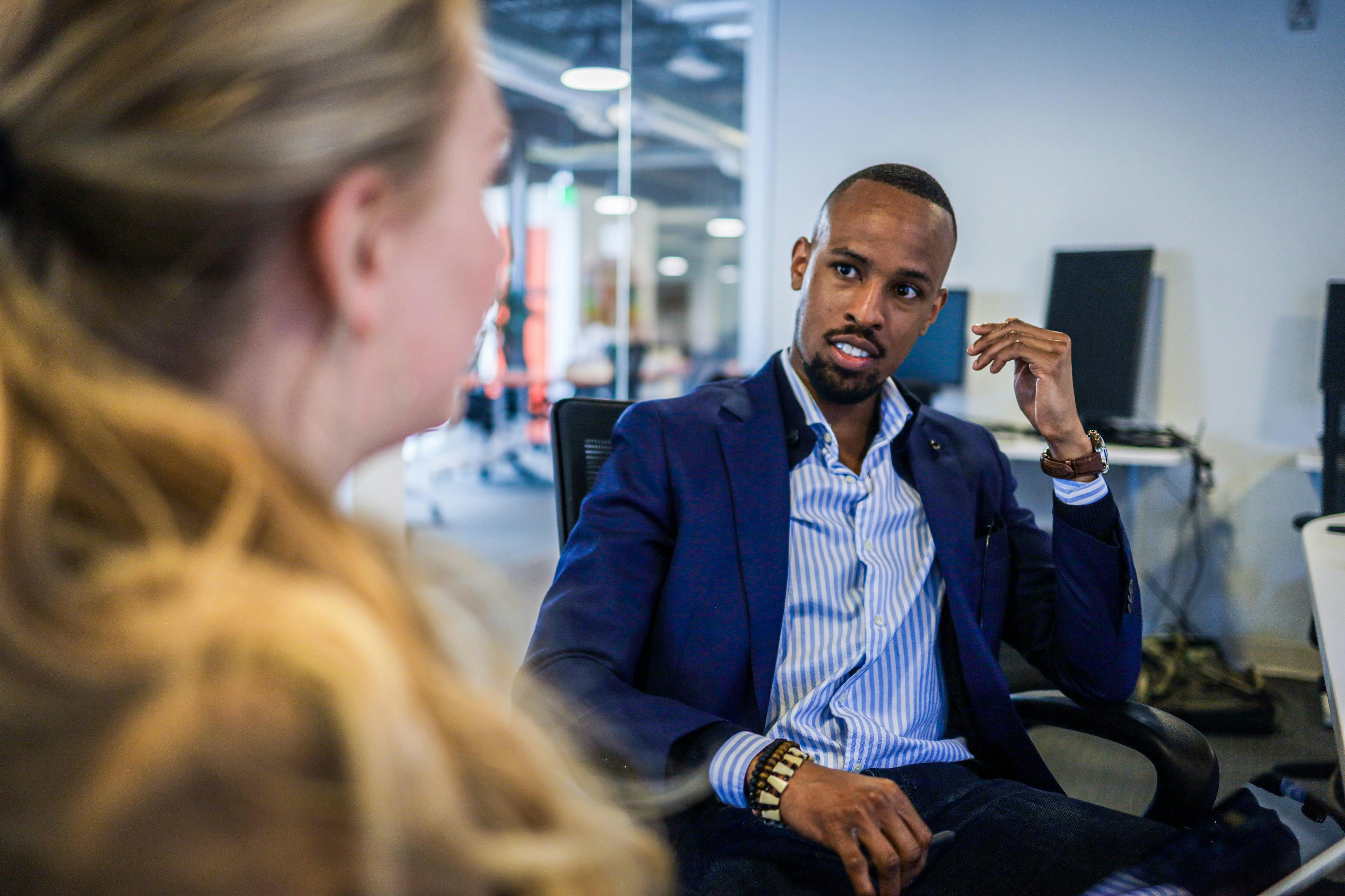
Coaching addresses the specific situation a manager is actually facing right now. It is not hypothetical. It is “here is the conversation I have to have with my underperformer on Thursday, help me think through it.”
The data backs up why it works. Gallup's research on manager development found that managers who receive training in coaching and people development see up to 18% higher engagement among their own teams, along with a 20% to 28% boost in other manager performance metrics.
A classic study published in Public Personnel Management, cited by American University's executive education program, found that training alone lifted productivity by about 22%, but training combined with coaching lifted it by 88%. The International Coaching Federation reports that 87% of executives surveyed in an FMI study agreed executive coaching delivers a high return on investment, and a separate PwC and Association Resource Center survey found an average return of seven times the cost of coaching.
The limitation is scale and access. Traditional 1:1 coaching at the executive level is expensive, and most organizations cannot deploy it broadly enough to reach every new manager. This is the gap ExpertX, Growthspace's AI coaching solution, was built to close: it gives new managers always-on access to expert-grounded guidance between live sessions, so coaching is not limited to whoever can afford an executive coach.
Best for: applying skills to real situations, building self-awareness, and addressing individual gaps. High impact, but needs to be paired with foundational content.
3. Peer learning and group cohorts
Peer learning is one of the most underused formats in new manager programs, and one of the most effective. When a cohort of new managers meets regularly to share what they tried, what failed, and what they are learning, the learning becomes contextual and ongoing instead of a one-time event. It also normalizes the vulnerability of being new to management, which matters more than most programs acknowledge.
Best for: reinforcement, accountability, and building a support network that outlasts the formal program. Growthspace's group skill development format is designed specifically for this: small cohorts of 3 to 6 people that build shared language and peer accountability alongside measurable team performance gains.
Why single-format programs keep failing
Here is the pattern that shows up again and again: an organization invests in a solid two-day workshop. New managers leave energized, with a notebook full of frameworks. Six weeks later, nothing has changed. The manager who struggled with delegation is still doing everything themselves. The one who avoided hard conversations is still avoiding them.
This is not a failure of the workshop. It is a failure of the program design.
Learning happens in layers, and most programs only fund the first one:
- Conceptual understanding (what good looks like) - workshops deliver this
- Situational application (how to do it in my specific context) - coaching delivers this
- Habit formation (doing it consistently under pressure) - reinforcement and peer accountability deliver this
Each layer depends on the one before it. A workshop without coaching produces awareness without application. Coaching without peer reinforcement produces individual progress that fades once the engagement ends. This is also why building leadership bench strength requires more than a single intervention: it requires a structure that carries managers through all three layers.
How to build a program that actually sticks
A blended program does not have to be complex. The structure that works looks less like a curriculum and more like a rhythm.
The core structure
The coaching sprints in the middle are the most critical piece. This is where the rubber meets the road. A new manager working through their first performance conversation, their first team conflict, or their first hire needs someone to think with, not another module to watch. Growthspace's platform is built to blend these formats in exactly this sequence, mixing 1:1 expert sessions, group cohorts, and AI-powered support across a single program instead of forcing HR teams to stitch together separate vendors.
What to prioritize in the first 90 days
New managers tend to struggle with the same handful of transitions, regardless of industry: having difficult conversations, giving feedback they were never trained to deliver, delegating without micromanaging, and running effective 1-on-1s. None of these are knowledge problems. A new manager can read about how to give feedback. What they need is practice, feedback on that practice, and someone to debrief with after the real conversation happens.
On that last point, the data is specific. Gallup's research on manager habits found that managers who hold a meaningful weekly conversation with each employee see measurably higher engagement, lower turnover, and a higher likelihood of performance improvement compared to peers who do not. A weekly 1-on-1 is a small habit with an outsized return, and it is exactly the kind of behavior that coaching and peer accountability are built to reinforce.
Measuring what actually changes
Manager effectiveness scores from direct reports, team engagement scores before and after the program, and retention rates for teams managed by program participants are the metrics that matter most. Most organizations already have this data sitting in engagement surveys and turnover reports. The gap is usually connecting it back to the training investment, not collecting it in the first place.
This is also where the coaching data is worth revisiting: the ICF research cited above found a strong correlation between coaching and increased employee engagement, which means the engagement scores you are already tracking are a reasonable proxy for whether the coaching layer of your program is working.
The bottom line
The organizations seeing real results from new manager training are not doing anything exotic. They are combining formats deliberately, building in reinforcement, and measuring what changes in behavior, not just what gets completed.
Workshops build the foundation. Coaching applies it to real situations. Peer learning makes it stick. Measurement proves it worked. Manager engagement and effectiveness scores respond to this kind of structured investment, and the research is consistent on that point even when individual ROI figures vary by industry and program design.
If you are building or rebuilding a new manager program and want to see how precision skill development and expert-matched coaching can accelerate the process, book a demo with Growthspace to see how leading organizations are structuring it.

Related Articles

.png)




Ready to turn insights into impact?